
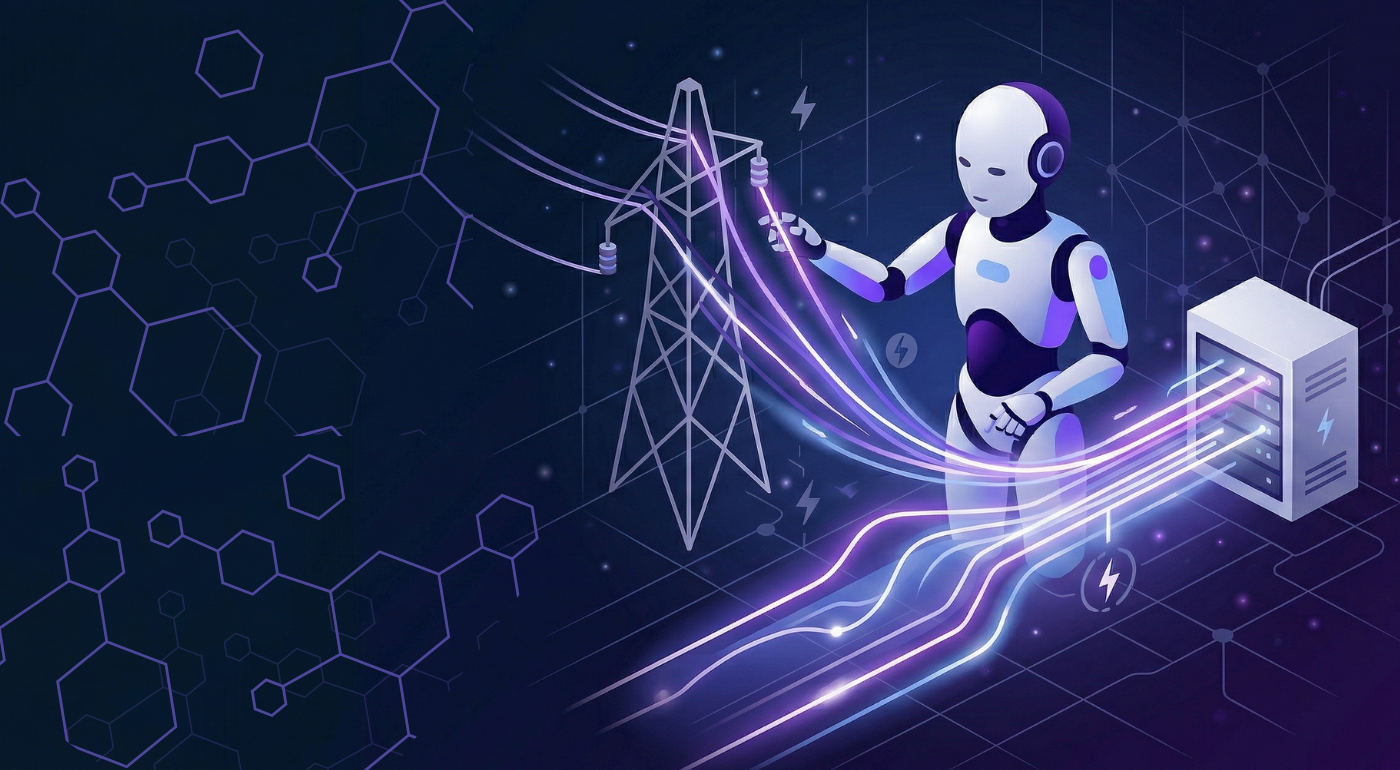

AI power is becoming the defining constraint on frontier development. For years, the conversation around AI infrastructure focused on chips, memory bandwidth, and network scale—how many GPUs a cluster contained, how fast data moved between them, and whether hyperscalers could secure enough accelerators to stay competitive. Those bottlenecks remain real, but they are increasingly overshadowed by a more fundamental limit: the electricity required to run AI systems at scale.
As AI infrastructure expands toward clusters of tens of thousands of GPUs, power consumption is colliding with the slower reality of grid expansion. Industry analysts estimate that a large hyperscale data center requires power in the range of 100 megawatts (MW) or more, which is roughly equivalent to the annual electricity consumption of around 400,000 electric vehicles. The infrastructure to deliver that power cannot be deployed at “software speed”.
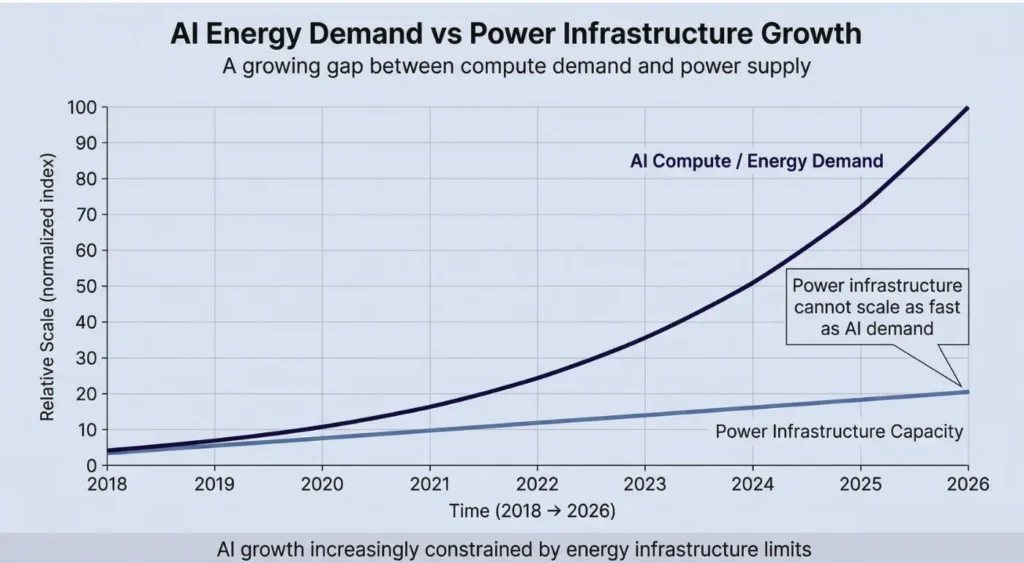
This mismatch is what industry observers now call the “power wall“: a structural gap between how quickly AI compute demand can grow and how slowly power supply can expand. The limiting factor in building the next generation of models is no longer just model design or GPU availability. It is increasingly tied to AI power—the sheer watts required to train and run frontier systems, and the grid capacity available to deliver them.
Why AI Compute Demand Is Growing So Quickly
The starting point for the power wall is simple: AI compute demand is compounding along multiple axes. Each new generation of frontier models tends to use more parameters, more data, and more experimentation than the last. Training a state‑of‑the‑art system is no longer a single run on a fixed dataset; it involves many large runs to explore architectures, training recipes, and data mixtures. This multiplies the required compute and directly increases AI power consumption.
The scale of this multiplication has changed dramatically. Early transformer models were trained on modest hardware: GPT‑1 (2018), for example, required roughly one month on 8 GPUs, with most experiments conducted on 4‑ to 8‑GPU systems. GPT‑2, released the following year, was trained on 256 TPU v3 cores. By 2020, GPT‑3 pushed this to 10,000 NVIDIA V100 GPUs running for 15 days. Today, AI infrastructure for frontier training ranges from clusters of 16,000–24,000 accelerators to much larger assemblies—in 2024, Meta trained Llama 3.1 405B model on more than 16,000 H100 GPUs, while xAI assembled a 100,000‑GPU cluster in Memphis for Grok training.
At this scale, the aggregate GPU‑hours for a major training cycle can reach into the hundreds of millions—and labs do not run just one model. They iterate, branch, and fine‑tune continuously. The “hidden” compute is substantial: for every successful model release, a frontier lab may consume several times more compute in intermediate, failed, or exploratory runs. This ratio is estimated based on industry analysis; exact figures are not publicly disclosed.
Inference adds a second, more persistent layer of demand. Once AI models are deployed, they power chatbots, coding assistants, search, recommendation systems, and AI agents that run for extended periods. Unlike training, which comes in bursts, inference generates an always‑on load. As more products embed AI features, this baseline keeps rising.
Research released by MIT Technology Review in 2025 estimates that 80–90% of computing power for artificial intelligence is now used for inference. The result is that compute demand grows along two dimensions—bigger training runs and wider deployment—both of which reinforce each other.
The emergence of agentic systems may accelerate this further. Gartner’s 2026 analysis notes that agentic models require between 5 and 30 times more tokens per task than a standard chatbot, and can perform many more tasks than a human using GenAI. A single user query to an AI agent can trigger dozens or hundreds of internal model calls—tool use, reasoning steps, verification loops—multiplying per‑query energy use well beyond a standard chat response.
All of this sits on broader industry dynamics: competition among frontier AI teams drives them to match or exceed one another’s compute budgets, hyperscalers expand infrastructure as a competitive differentiator, and enterprises experiment more as per‑unit compute costs fall. Epoch AI, in March 2025, reports that the inference price of large language models (LLMs) has fallen dramatically in recent years. By tracking state-of-the-art results on six benchmarks over three years (2022, 2023, and 2024), they found the price to reach some performance milestones has dropped as much as 40× per year—for example, the cost to match GPT‑4 on a set of PhD‑level science questions.
This is the Jevons’ paradox in action: more efficient AI systems enable more widespread use, increasing total energy demand rather than reducing it. The power wall emerges because this demand curve is steep, flexible, and self‑reinforcing, whereas AI power infrastructure is slow and rigid.
How AI Data Centers Are Becoming Extremely Power-Intensive
Every unit of compute translates directly into AI power consumption, which in turn drives rapid growth in energy usage at the data center level. High‑end accelerators today commonly draw 500–700 Watts (W) at full load: NVIDIA’s H100 SXM5 has a configurable thermal design power (TDP) of up to 700W, while AMD’s MI300X operates at a maximum typical board power (TBP) of 750W. The H100 PCIe variant, suited for mainstream servers and AI inference, operates at 350W—delivering roughly 65% of the H100 SXM5’s performance while consuming half the power.
Systems that combine multiple accelerators, high‑bandwidth memory (HBM), and fast interconnects push overall board and server power significantly higher. An 8‑GPU server can easily consume 10 kilowatts (kW) or more at peak load, with some configurations drawing up to 18 kW based on power supply design. This is roughly what seven to fifteen US homes consume continuously.
Consider again a cluster of 20,000 GPUs. At a simplified average of 600 W per accelerator, that is 12 MW just for the GPUs—equivalent to the continuous consumption of roughly 10,000 homes. Once you add CPUs, memory, storage, networking, and overhead, total IT load can reach 20–25 MW. Then add the power for cooling, power conversion losses, and redundancy, and the facility’s total draw may climb toward 30–40 MW.
Modern liquid‑cooling systems can materially lower those facility‑level demands. Advanced liquid‑cooled AI infrastructure, while requiring specialized facilities, improves efficiency substantially: arXiv’s 2025 study of H100 systems found liquid cooling keeps GPU temperatures at 41–50°C versus 54–72°C for air cooling, producing about 17% higher performance per watt and lower energy overhead. By contrast, traditional air‑cooled facilities typically have a Power Usage Effectiveness (PUE) of 1.5–2.0 — meaning every watt powering compute requires another 0.5–1.0 W for facility support — whereas liquid‑cooled setups can push PUE closer to 1.2.
For large data centers aggregating multiple such clusters, design capacities of 50–100 MW are increasingly common. Meta’s infrastructure roadmap includes 350,000 Nvidia H100 GPUs by end of 2024, implying campus‑level power requirements well into the hundreds of megawatts. More recently, the company announced Prometheus—a 1‑gigawatt (GW) cluster spanning multiple data center buildings and weatherproof tents—and Hyperion, expected online beginning in 2028 with capacity scaling up to 5 GW.
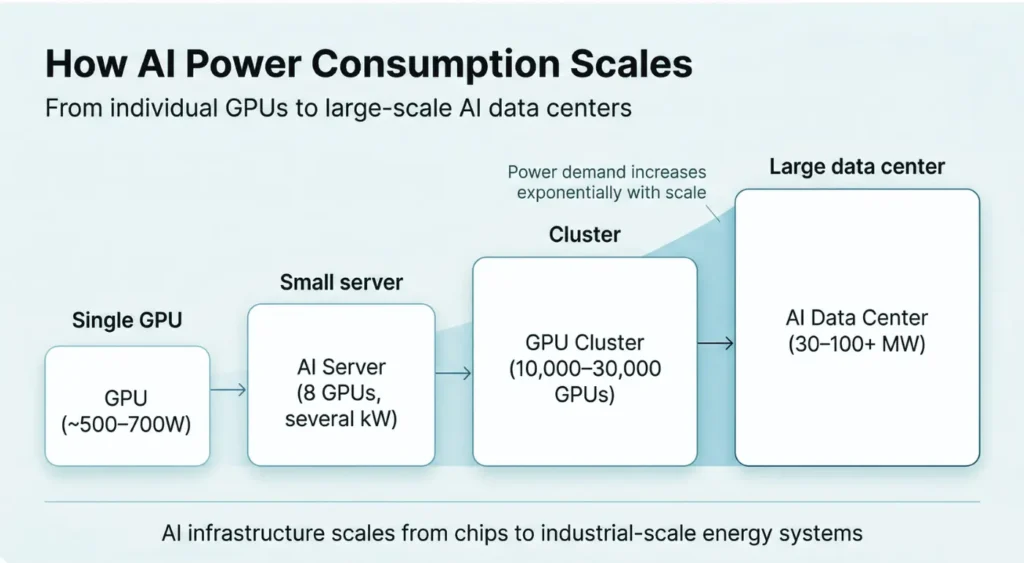
At this level, data centers behave like industrial energy users. They need dedicated high‑voltage connections, robust substations, and grid infrastructure capable of handling large, steady loads. They compete with factories, chemical plants, and other major consumers for limited grid capacity.
The traditional view of AI data centers as “back‑office infrastructure” is no longer accurate; data centers are becoming anchor energy customers that can materially change local electricity demand patterns. In its report released in 2024, the International Energy Agency projects that artificial intelligence will drive data center power consumption in the United States up by roughly 240 Terawatt-hour (130%) by 2030, with per‑capita data center usage exceeding 1,200 kilowatt-hour—roughly 10% of an average American household’s annual electricity use.
Globally, another IEA projection shows that data center power consumption will rise from approximately 415 terawatt‑hours (TWh) in 2025 to about 945 TWh in 2030, with consumption in AI‑dedicated data centers tripling over that period. Deloitte analysis shows a similar trajectory, forecasting an increase to 1,065 TWh by 2030. Meanwhile, Goldman Sachs Research estimates a 160–165% rise in power demand (measured in capacity) by 2030 compared to 2023 levels.
Power density also matters strategically. AI facilities often concentrate huge loads in relatively small physical footprints. Traditional CPU racks consumed 5–15 kW; early AI servers with eight GPUs pushed this to 20–40 kW per rack. Goldman Sachs notes that emerging systems now project 600 kW per rack—equivalent to 500 US homes, or 50 times more power per rack than CPU data centers used five years prior. Public industry roadmaps are already targeting densities as high as 1 MW per rack.
This requires advanced cooling solutions, from hot‑aisle containment (directing hot exhaust away from equipment) to direct‑to‑chip liquid cooling, which circulates coolant through cold plates attached to the hottest components. A recent McKinsey’s research projects liquid‑cooling spending will grow 45–50% annually, from $2–3 billion in 2025 to $15–17 billion by 2030, with direct‑to‑chip systems accounting for 30% of the cooling market by 2030.
Higher density is not merely a technical challenge—it is a strategic response to the power wall. Liquid cooling reduces the facility power overhead and allows more compute per megawatt of grid connection, effectively stretching limited power capacity. But it also adds capital cost and complexity: what began as server rooms in office parks is evolving into purpose‑built AI campuses designed from the ground up around AI power and cooling.
This shift has a strategic implication. In traditional cloud computing, data centers were built near users to minimize latency. In AI infrastructure, the primary site selection criterion is increasingly power availability. Hyperscalers and frontier labs are now securing grid capacity years in advance—sometimes before they have firm plans for the compute that will occupy it.
The power wall is not just about total energy; it is about the physical and electrical density at which that energy can be delivered to AI systems. This intensity is already driving major AI operators into unprecedented investments in power procurement.
Why Power Infrastructure Cannot Expand as Quickly as AI Demand
While compute demand can scale rapidly, the energy infrastructure required to support AI power expands at a fundamentally different pace. The root cause of what is increasingly termed the “power wall” is straightforward: energy systems do not operate at software speed.
Frontier laboratories can decide within months to double their compute targets, execute new hardware contracts, or expand their cloud footprints. Semiconductor manufacturers release successive GPU generations on roughly two-year cycles.—NVIDIA’s Hopper H100 arrived in 2022, Blackwell B200 in March 2024, and Rubin-based products are expected in the second half of 2026. Software optimizations move faster still. In short, the demand side of the power equation is highly elastic. The supply side is not.
Generation, transmission, and distribution infrastructure operates on timescales measured in years, not quarters. Bringing new capacity online—whether gas, wind, solar, or nuclear—requires securing land, permits, and financing; completing environmental reviews; procuring equipment; and, in many cases, navigating public consultations and legal challenges before a single megawatt is delivered.
Nuclear development represents the most acute illustration of this mismatch. Plant Vogtle Units 3 and 4 in Georgia required over a decade from construction commencement to commercial operation, spanning 2009 to 2024, with total costs escalating from an initial estimate of $14 billion to more than $30 billion.
Next-generation approaches have not yet resolved the fundamental tension between ambition and economics: NuScale’s small modular reactor design received U.S. Nuclear Regulatory Commission approval, yet its first planned commercial deployment was cancelled in 2023 due to prohibitive costs—demonstrating that regulatory clearance and economic viability remain distinct and independent thresholds.
Generation timelines, however, represent only part of the constraint. The deeper bottleneck lies in grid interconnection. A December 2025 report from Lawrence Berkeley National Laboratory found that more than 2,060 GW of generation and storage capacity are actively seeking grid connection in the United States, with average queue wait times now exceeding four years. The attrition rate within these queues is severe: of all capacity that applied for interconnection between 2000 and 2019, only 13% had reached commercial operation by the end of 2024, while 77% was ultimately withdrawn. This is not a generation shortage in isolation—it is a systemic grid access crisis.
Transmission and distribution constraints compound the problem further. Even where generation capacity exists, delivering power to an AI data center may require new high-voltage transmission lines, upgraded substations, and reinforcement of local distribution networks. Each of these steps involves multiple regulatory bodies, utilities, and approval processes. Grid operators must simultaneously manage reliability, contingency planning, and regional power flows—accommodating a new 100-megawatt load is an exercise in system-wide engineering, not a simple connection.
The strain is already measurable in key markets. Dominion Energy has reported, in late 2025, that electricity demand in Virginia—home to the world’s largest concentration of data centers in the United States—is on course to double, driven substantially by AI infrastructure buildout. In Arizona, existing data centers in the Phoenix metropolitan area already draw approximately 350 MW; however, the pipeline of proposed projects could collectively demand up to 19,000 MW, far exceeding the utility’s record peak demand of 8,200 MW, prompting Arizona Public Service to defer new data center connections in order to safeguard grid reliability.
In Nevada, NV Energy—which provides electricity to approximately 90% of the state—has estimated that proposed data center developments alone could require roughly three times the power currently needed to serve Las Vegas, characterizing the demand surge as unprecedented in the utility’s history.
The phenomenon is not confined to the United States: in Great Britain, the Office of Gas and Electricity Markets (Ofgem) has warned that approximately 140 proposed data center projects could collectively require 50 GW of capacity, surpassing the nation’s current peak electricity demand and risking significant delays to clean energy integration.
The result is a structural mismatch between AI power demand and available grid capacity. AI infrastructure requirements can double within a matter of years; major grid expansions typically require five to ten years to materialize. In a May 2026 analysis, Bessemer Venture Partners notes that a data center can be constructed in 12 to 18 months, yet the grid connection required to power it may not be available for five to seven years.
The analysis also found that of 110 data center projects scheduled for 2025 in the United States, more than a quarter experienced delays attributable to power availability, permitting challenges, and construction constraints. As a consequence, hyperscalers are no longer simply procuring hardware and securing physical space, they are acquiring power capacity years in advance, often before the compute workloads that will consume it have been fully defined.
The market evidence is unambiguous. For example, Meta has recently announced nuclear partnerships with Vistra, TerraPower, and Oklo, targeting up to 6.6 GW of capacity by 2035 in direct support of its Prometheus supercluster. Similarly, Amazon has committed $500 million to X-Energy to advance more than 5 GW of small modular reactor capacity, with an initial agreement in Washington State targeting 320 MW, expandable to 960 MW. Meanwhile, Microsoft executed a 20-year power purchase agreement tied to the restarted Three Mile Island reactor, supported by a $1 billion Department of Energy loan.
Alphabet has also taken action, acquiring Intersect Power for $4.75 billion to accelerate co-located data center and generation capacity. Even SpaceX’s xAI division has committed more than $2.8 billion to portable gas turbines as a near-term bridge solution for its Colossus facilities. Taken together, such strategic shifts are not speculative positions—they are strategic acknowledgements that AI infrastructure must henceforth be planned around energy availability, rather than treating it as a given.
These examples represent a broader pattern. Every major hyperscaler and frontier AI is now actively securing energy capacity through some combination of PPAs, direct generation investment, nuclear partnerships, or on-site bridging solutions. The specific mix varies by company and region—some emphasize renewables with storage, others bet on nuclear baseload, and there are those who use gas turbines as temporary bridges—but the underlying imperative is the same: AI power must be locked in before the compute that requires it.
The power wall marks the inflection point at which AI operators recognize that growth is no longer constrained by GPU procurement, but by how much AI power the grid can reliably deliver, and on what timeline. This fundamentally reshapes the competitive landscape: access to large-scale, dependable energy is emerging as a strategic moat that structurally advantages early movers and well-capitalized incumbents.
How Power Constraints Could Reshape AI Infrastructure Strategy
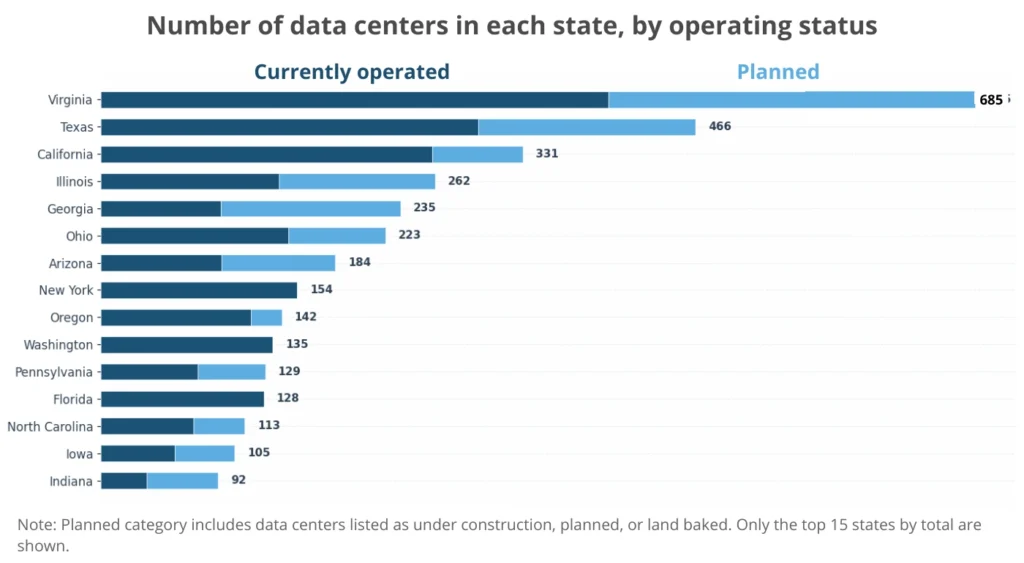
AI deployment is increasingly constrained by access to reliable, affordable power, and that constraint is reshaping where and how compute is built. In the United States — home to more than 3,000 operational data centers and roughly 1,500 additional facilities in development — energy availability, interconnection timelines, and local policy are now primary determinants of whether projects proceed, stall, or die. As a result, operators are pursuing geographic arbitrage: shifting capacity toward regions that can supply megawatts at scale, offer lower costs, and present fewer regulatory obstacles.
This redistribution is already visible in regional patterns. Based on a recent analysis of Pew Research, The South and Midwest now account for roughly three-quarters of planned U.S. data centers, and about 67% of new builds are locating in rural areas rather than traditional urban tech hubs, reflecting a search for available land and grid capacity. Northern Virginia remains an industry epicenter — hosting nearly 600 operational facilities with an additional 1,000 MW currently under development and over 5,000 MW planned for the future — but other states are mounting a challenge.
According to a JLL report released in February 2026, Texas has attracted large-scale data center investment by coupling abundant renewable generation with faster interconnection processes; Texas data centers demanded nearly 8 GW at peak in 2025, and Dallas County alone is projected to approach about 10 GW by 2030, prompting some analysts to forecast Texas could overtake Northern Virginia as the world’s largest data center market within this decade.
Rising local electricity costs and visible strain on distribution systems have intensified community opposition and policy responses. In some clusters, monthly electricity costs near data centers have increased by up to 267%, contributing to local resistance and regulatory pushback. That resistance has produced concrete policy action: Axios’ April report indicates that Maine paused new data center projects requiring more than 20 MW until October 2027, and at least eleven other states have proposed similar restrictions, signaling that the traditional pull of proximity to major tech cities may weaken if urban grids remain congested.
Faced with these limits, hyperscalers are moving beyond simple site selection toward deeper integration with energy producers and long-term energy contracting. Recent actions — long-term nuclear-linked PPAs, commitments to small modular reactors, multi-gigawatt nuclear partnerships, strategic acquisitions of generation companies, and short-term turbine solutions — demonstrate a deliberate strategy to lock in power years ahead of compute demand. These investments function as risk management: they reduce exposure to interconnection delays, hedge against escalating local prices, and circumvent permitting bottlenecks that can otherwise derail builds.
The strategic consequence is profound. Companies that secure energy early gain a durable advantage because grid capacity is harder to expand quickly than IT capacity is to build. The decisive competitive question is shifting from “Who has the best GPUs?” to “Who has the power to run them?” That shift will likely redirect capital and talent toward power-abundant regions, creating new AI hubs outside of traditional tech corridors.
At the same time, firms continue to pursue efficiency — through improved model architectures (for example, mixture-of-experts routing), more efficient training regimes, and hardware-level gains — to extend constrained capacity. Yet efficiency alone will not eliminate the constraint. As compute becomes more energy-efficient, deployment typically accelerates, increasing total power demand in a pattern akin to Jevons’ paradox.
In short, efficiency can mitigate but not remove the “power wall”: securing sufficient, reliable energy remains central to AI infrastructure strategy and will shape the industry’s geography and competitive landscape going forward.
Why Energy May Become the Next Bottleneck in AI Development
Major cloud providers’ public sustainability commitments are colliding with rapidly rising power needs for training and operating frontier models. Microsoft, Amazon, and Google have each announced ambitious targets: Microsoft aims to be carbon negative by 2030; Amazon targets net-zero emissions by 2040; Google pursues 24/7 carbon-free energy operations.
Yet demand for electricity from AI workloads is growing faster than zero-carbon generation can be deployed. Microsoft’s 2025 own reporting illustrates this tension: total emissions, including Scope 3, rose 23.4% in fiscal 2024 even as the company contracted 34 GW of carbon-free electricity. Amazon shows a similar trend as indicated in 2024 Stand Earth report—Scope 1 emissions increased 7% year-over-year to 14.27 million metric tons CO₂e, a 25.5% compound annual growth rate since its 2019 Climate Pledge. Google, for its part, has achieved a 66% global hourly average for carbon-free energy, but without proactive renewable procurement this figure would drop to roughly 39%, mirroring the underlying grid mix, according to Smart Energy Decisions report, released in June 2025.
Much of this gap can be attributed to how clean energy is accounted for. Hyperscalers commonly rely on virtual power purchase agreements (VPPAs) and renewable energy certificates (RECs) to support claims of “100% renewable” energy use. Under a VPPA, a company agrees to purchase renewable energy from a wind or solar farm at a fixed price, but the physical electricity feeds into the broader grid rather than flowing directly to the buyer; the company receives certificates to offset its own reported consumption.
As Sustainalytics noted in December 2025, this arrangement creates a significant credibility problem: a data center may appear on paper to run entirely on renewable energy while, in practice, drawing power from fossil-fuel sources for much of the day. As AI power consumption scales into the gigawatt range, investors are increasingly scrutinizing whether these virtual contracts obscure a continued reliance on carbon-intensive local grids.
The risk profile of artificial intelligence projects is evolving accordingly. Long-term roadmaps must now account for energy price volatility and the possibility of multi-year delays in connecting new facilities to the grid. Investors and operators are being compelled to view AI infrastructure not merely as a technology stack, but as a bundle of energy and regulatory exposures. In this context, electricity access has become a strategic bottleneck — as critical to AI deployment as access to cutting-edge semiconductors.
The power wall marks a structural turning point for the industry. What began as a software-driven field built on general-purpose cloud computing is evolving into an energy-intensive industry that must plan in megawatts and grid capacities. AI operators are increasingly drawn into long-term decisions about where to build, how to source power, and how to reconcile growth ambitions with the realities of electricity supply.
The key insight is that the frontier of AI is no longer defined solely by research breakthroughs or chip roadmaps. It is increasingly shaped and constrained by the slow, capital-heavy world of energy infrastructure. Power is no longer a background operational concern — it is becoming one of the primary forces determining where and how AI systems can be built and scaled.
A pressing question emerges: can the vision of broadly accessible AI — the hyperscaler model of offering scalable compute to a wide range of users — outpace the centralizing effect of energy scarcity? According to a Brookings Institution research from April 2026, seven of thirteen major U.S. grid regions are projected to operate below critical safety margins by 2030 due to concentrated AI loads, with grid connection waitlists in established hubs already stretching to seven to ten years or more. If these projections hold, the power wall may ultimately concentrate the most capable AI systems in the hands of those who secured grid access first.
This article is being provided for educational purposes only. The information contained in this article does not constitute a recommendation from Intellaix to the recipient, and Intellaix is not providing any financial, economic, legal, investment, accounting, or tax advice through this article or to its recipient.
Sources and references:
- Socomec. “Understanding the power consumption of data centers”
- OpenAI, June 2018. “Improving language understanding with unsupervised learning”
- Hugging Face. “OpenAI Community/GPT-2”
- Cerebras, November 2022. “Creating Sparse GPT-3 Models with Iterative Pruning”
- Meta, July 2024. “Introducing Llama 3.1: Our most capable models to date”
- Supermicro, 2024. “Inside the 100K GPU xAI Colossus Cluster that Supermicro Helped Build for Elon Musk”
- MIT Technology Review, May 2025. “We did the math on AI’s energy footprint…”
- Gartner, March 2026. “Gartner Predicts That by 2030, Performing Inference on an LLM With 1 Trillion...”
- Epoch AI, March 2025. “LLM inference prices have fallen rapidly but unequally across tasks”
- Nvidia. “NVIDIA H100 GPU”
- AMD. “AMD INSTINCT™ MI300X ACCELERATOR”
- Nvidia. “NVIDIA H100 Tensor Core GPU Architecture”
- Supermicro. “Supermicro SYS-821GE-TNHR | 8U GPU Server”
- arXiv, July 2025. “Cooling Matters: Benchmarking Large Language Models and …”
- Meta, March 2024. “Building Meta’s GenAI Infrastructure”
- Meta, September 2025. “Meta’s Infrastructure Evolution and the Advent of AI”
- International Energy Agency, 2024. “Energy demand from AI”
- International Energy Agency, 2025. “Executive summary”
- Deloitte, November 2024. “As generative AI asks for more power, data centers…”
- Goldman Sachs, February 2025. “AI to drive 165% increase in data center power demand by 2030”
- Goldman Sachs, May 2025. “1,000 homes of power in a filing cabinet …”
- McKinsey & Company, October 2025. “Beyond compute: Infrastructure that powers and cools AI data centers”
- Nvidia, March 2022. “NVIDIA Announces Hopper Architecture, the Next Generation of Accelerated Computing”
- Nvidia, March 2024. “NVIDIA Blackwell Platform Arrives to Power a New Era of Computing”
- Nvidia, January 2026. “NVIDIA Kicks Off the Next Generation of AI With Rubin”
- U.S. Energy Information Administration, May 2024. “Plant Vogtle Unit 4 begins commercial operation”
- Nuscale Power. “Company History”
- Energy Markets & Planning, May 2026. “Queued Up: Characteristics of Power Plants Seeking Transmission Interconnection”
- Dominion Energy, December 2025. “Dominion Energy releases statement in response to U.S. Department…”
- Arizona’s Family, July 2025. “Data centers pushing Phoenix area’s power grid to the limit”
- PBS News, April 2026. “States are struggling to meet their clean energy goals. Blame data centers”
- The Guardian, February 2026. “New datacentres risk doubling Great Britain’s electricity use, regulator says”
- Bessemer Venture Partners, May 2026. “Roadmap: The AI data center stack”
- Meta, January 2026. “Meta Announces Nuclear Energy Projects, Unlocking Up to 6.6 GW to Power American…”
- Amazon, February 2026. “Amazon continues to be one of the world’s leading corporate purchasers of carbon-free energy”
- AP News, November 2025. “Energy Department loans $1B to help finance the restart of nuclear reactor on Three Mile…”
- Alphabet Investor Relations, December 2025. “Alphabet Announces Agreement to Acquire Intersect to Advance U.S…”
- Wired, May 2026. “SpaceX Is Spending $2.8 Billion to Buy Gas Turbines for Its AI Data Centers”
- Data Center Map. “USA Data Centers”
- Pew Research, April 2026. “Most new data centers in the U.S. are coming to rural areas”
- Harvard Kennedy School, April 2026. “Data Centers and Large-Scale Electric Growth: The Virginia and Texas Experiences”
- JLL, February 2026. “North America Data Center Report Year-end 2025”
- Bloomberg, September 2025. “AI Data Centers Are Sending Power Bills Soaring”
- Axios, April 2026. “The best and worst states for AI data centers”
- Microsoft, 2025. “2025 Environmental Sustainability Report”
- Stand Earth, July 2024. “Amazon’s Sustainability Report shows the company moving…”
- Smart Energy Decisions, June 2025. “Environmental Report”
- Sustainalytics, December 2025. “Can Big Tech Keep Its Climate Commitments as Data Centers Scale?”
- Brookings, April 2026. “Global energy demands within the AI regulatory landscape”
